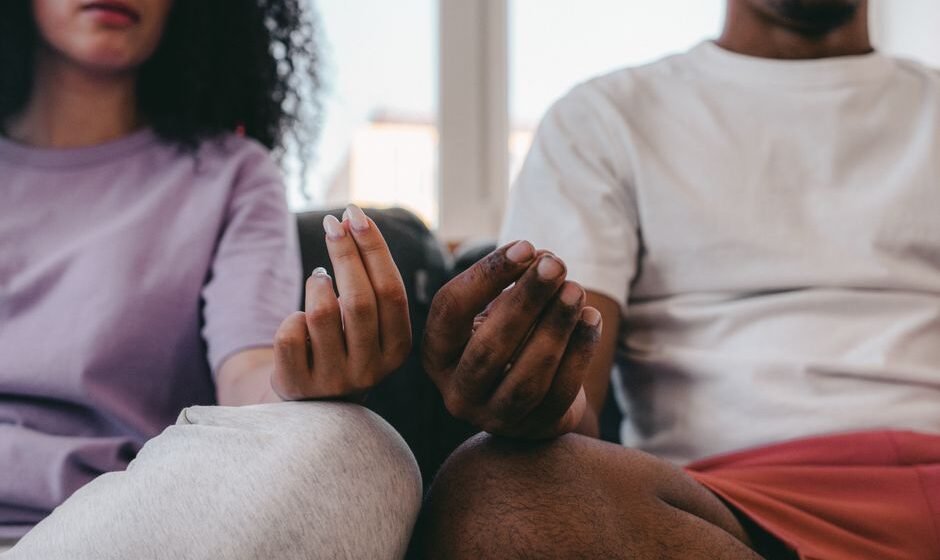

Yes, married couples and family members can apply for the same Vipassana course, at the same center, on the same dates. But once the course begins, they will not see, speak to, or contact each other in any way for the full ten days.
Applying Together Is Completely Normal
There is nothing unusual about registering as a couple or a family. Each person fills out their own application, and the application process works exactly the same whether you are applying alone or alongside your partner, parent, sibling, or close friend. Centers see this often, and it does not raise any flags or require special permission.
But Once You Arrive, You’re Fully Separated
This is the part that surprises people. Vipassana centers keep men and women completely separate for the entire course: separate housing, separate meditation hall entrances and seating, separate dining areas, and separate walking paths outdoors. This applies to every student, not just strangers, for reasons covered in more depth in why Vipassana courses are separated by gender.
The Code of Discipline is explicit that married couples get no exception. Spouses, family members, and close friends attending the same course are asked not to contact each other in any way for the full ten days, right alongside Noble Silence, which already removes talking for almost everyone. No notes, no signals, no brief hallway chats. If you happen to spot your partner across a courtyard, the expectation is simply to keep walking.
Why the Rule Exists
The technique asks every student to turn attention fully inward, toward their own direct experience, for ten straight days. Any contact with someone you know, even a small wave or a shared glance, pulls attention right back outward and toward that relationship instead.
Treating a spouse the same as a stranger removes any temptation to check in, worry, or manage how the other person is doing. It is not personal, and it is not unique to married couples. The same rule applies equally to parents attending with adult children, or two close friends who signed up together.
What Happens After the Course
Once Noble Silence lifts on the morning of the last full day, couples and family members are free to reconnect, talk, and compare notes on what the ten days were like for each of them. Many describe that reunion as one of the most memorable parts of the whole experience, especially after not knowing how the other person was doing for so long. Some couples also report the shared experience shapes their relationship afterward, a topic covered in more depth in how Vipassana affects relationships.
What About Children?
Standard 10-day courses have a minimum age requirement, and young children are not permitted to attend alongside a parent. Vipassana centers run separate, shorter courses for children and teenagers instead, built around a different structure that does not require the same full separation. If your family includes younger kids, a joint 10-day adult course simply is not an option yet, and it is worth checking each center’s own age requirements before applying.
Practical Tips If You’re Going Together
Agree beforehand that you will not worry about each other during the course, since there is genuinely no way to check in even if something feels off. Decide in advance who will collect any shared luggage or handle logistics on the way home, since you also will not be able to coordinate those details mid-course.
It also helps to talk through the plan with any family members who are not attending, so nobody at home is confused about why neither of you is reachable. Telling family before the course covers how to set that expectation clearly, and applies just as much when two people from the same household are both away at once.
Many couples find the full separation is exactly what makes the course work. Without the option to lean on each other, each person has to sit with their own experience directly, which is the entire point of going in the first place.
Want to actually learn Vipassana? This article is independent, informal writing, not official teaching. The technique itself is taught only at free, residential 10-day courses run by the Vipassana Research Institute in the tradition of Goenkaji. You can find a course near you at dhamma.org.